
And, this morning, he arrived at Bells with 'em…
“If it wasn’t Kelly Slater I couldn’t give a shit,” says the semi-retired shaper Greg Webber, explaining his return to the shaping bay as he pulls a modern interpretation of his famous early-nineties banana board from the rear compartment of a station-wagon.
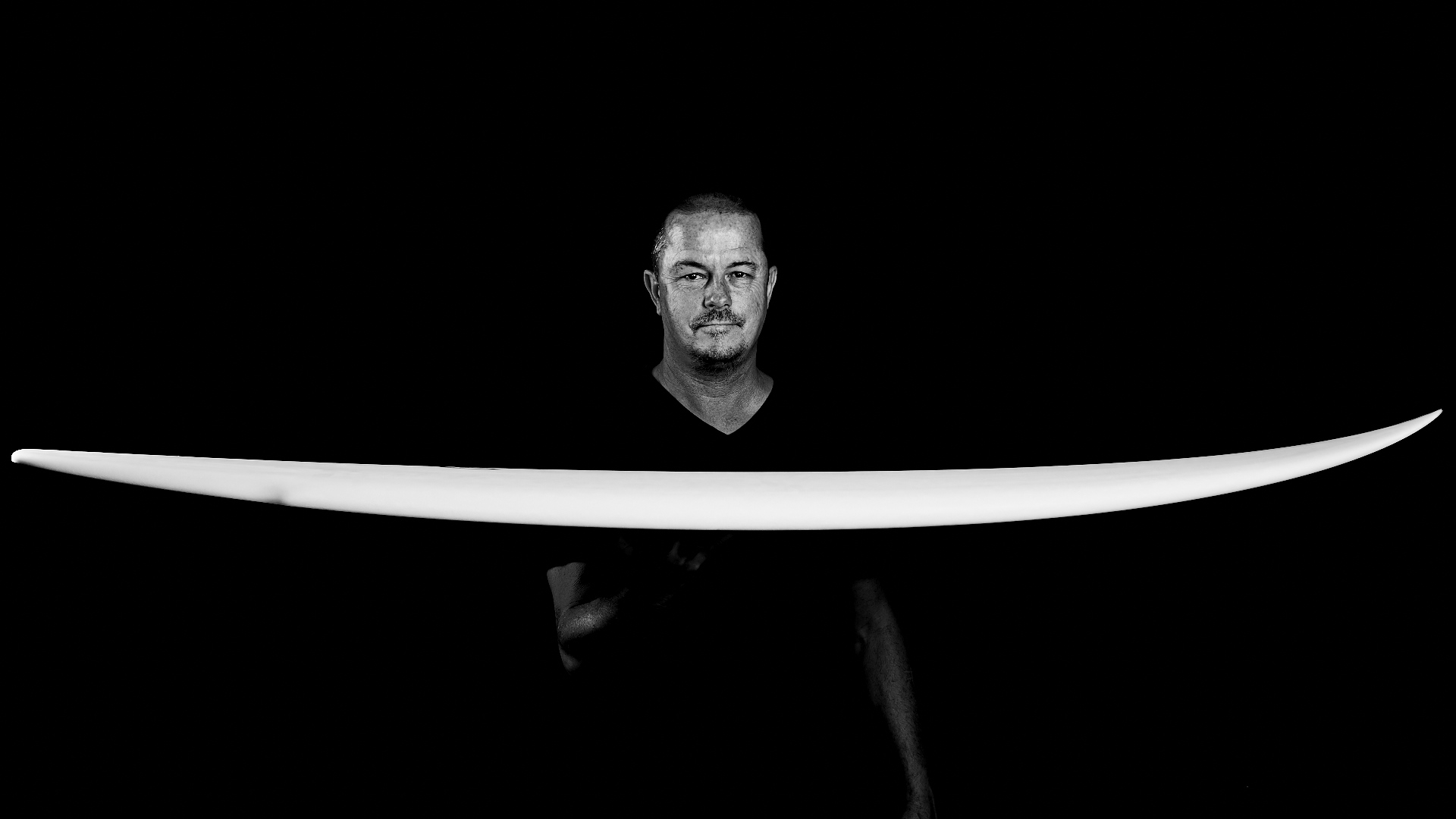
Greg has stopped, briefly, at a photographer’s studio in Sydney, en route to the surfboard’s destination at Bells Beach. He smiles.
“But if Kelly likes it…”
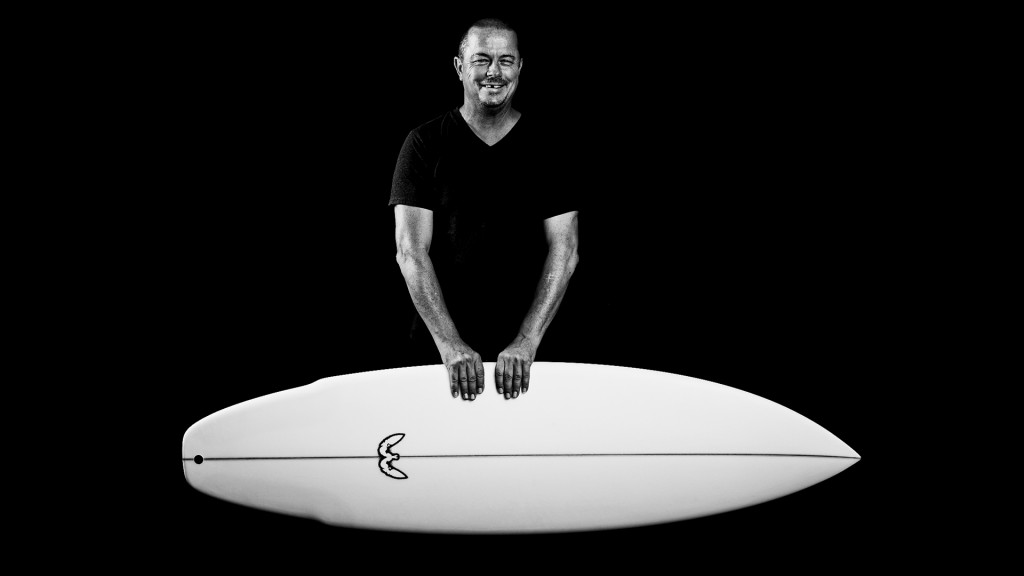
The surfboard is a five-ten squash tail, with flyer, all white, the Webber Rorshchach logo mid-deck, and when one holds it by the tail, nose down, and looks down along the deck, the famous continuous curve, or banana, reveals itself. The curve is as sculptural as it is beautiful. Such tones and harmonious ensemble. To even get the blank to shape the board, Greg had to physically bend the blanks to the required curve.
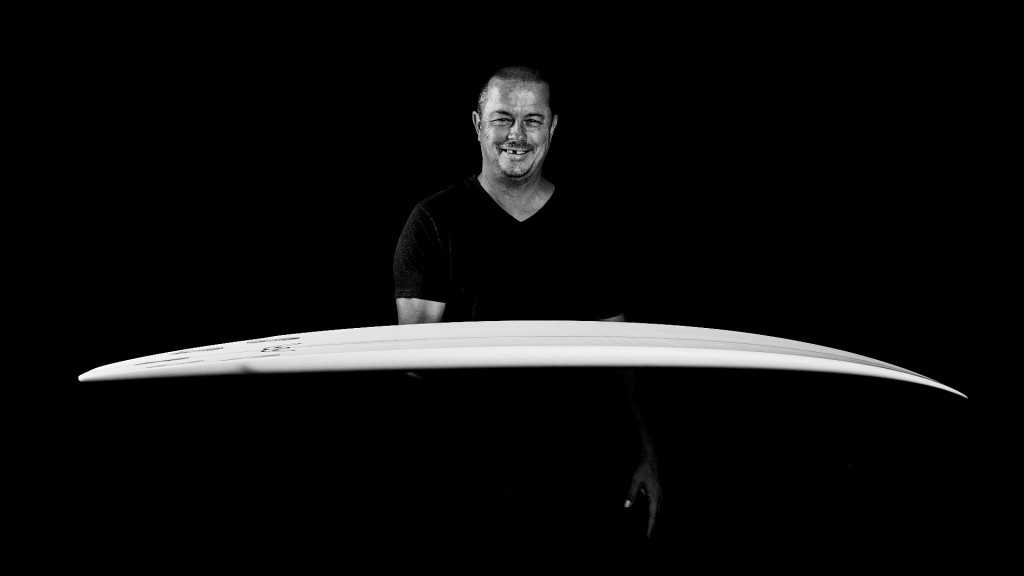
Is it art or a workable machine?
A little history. In 1992, Kelly Slater won his first world title, that ain’t news. But, in that year’s first event, at Narrabeen, it was the Australian Shane Herring, on a Webber banana, who beat Kelly in the final. History has recorded Slater’s rapid upward trajectory as well as Herring’s equally rapid trajectory in the opposite direction.
But Kelly never forgot about Herring and, specifically, the turns he was able to create on Webber’s continuous curves.
“The boards didn’t have their full day in the sun, in my opinion,” Slater had told me earlier. “Did you see those turns Shane did on em? And Rommel (Michel Rommelse) and Richie (Lovett)? When the waves have substantial power and speed they’ll do whatever you want and opens up new places on the wave.”
On an earlier call, Greg had told me about a photo Kelly had sent him (super low-res, natch, so the photos can’t be reproduced even online) and I ask that he open it on his phone. Greg has talked the photo up like crazy and I’m sceptical. The little file, this photo that is pixelated even on the screen of a telephone, is almost beyond description. But let me try.
We see a wave, maybe four feet, and Kelly is 10 metres out on the face, rail buried from nose to tail. He is two-thirds of the way through a cutback, and if one imagines the final few frames, Kelly has transmitted a turn so experimental it is, absolutely, one of the best I’ve seen in surfing.
“I wish Herro had stayed with them longer and the older crew like Barton had been open to them,” said Kelly. “It seemed like Shane couldn’t deal with the huge difference in design (focused on him and his success) and carry the weight of it around and he simply quit them instead of taming them down a little. He went straight back to flatter rockers and vee-bottoms I think, which didn’t suit what he had built his surfing around with the tight pocket turns even though he had the low centre of gravity and power to ride anything. The whole design was like this crazy, radical evolution that died abruptly… They were like Greg’s Chernobyl experiment, just super volatile and unstable.”
If you’ve ever tried to surf a banana you’ll know what Kelly’s talking about. They ain’t for beginners. Unless you’re turning, you’re sinking. Get ’em moving and they’re rockets.
Greg and Kelly’s 2015 version has lowered the rocker, but not the nature of the continuous curve. Greg pulls out the analogy of the banana board as a turbo engine as opposed to the normally aspirated engine.
Nothing special, at low revs, but once the turbo kicks in? The trick, of course, is getting rid of the turbo lag. And, so, Greg and Kelly have a few different version of the curve. There are three versions in the back of Greg’s wagon, all untouched, except for my dirty fingerprints on curve #2.
“Low speeds are an issue. It’s a constant balance mixing speed and maneuverability,” said Kelly. “There’s no reason you can’t calm the curves down a bit. Different waves, different curves. We’ll all die looking still looking for the perfect board.”
Is the modern banana going to work? Will Kelly ride ’em at Bells?
“I don’t know where I’ll personally end up with it but I’m into a mix of different designs and ideas at the moment and I’m sure something good will come from it. I’m still riding CI’s and also working with Tomo a bit and even got a couple nice boards from Stacey. I’m sure Maurice will have a couple options for me at Bells also. I’ll likely hit up Simon to see if we can make something for J Bay. Just lots of design ideas getting thrown at the wall. And they all have their merits…”
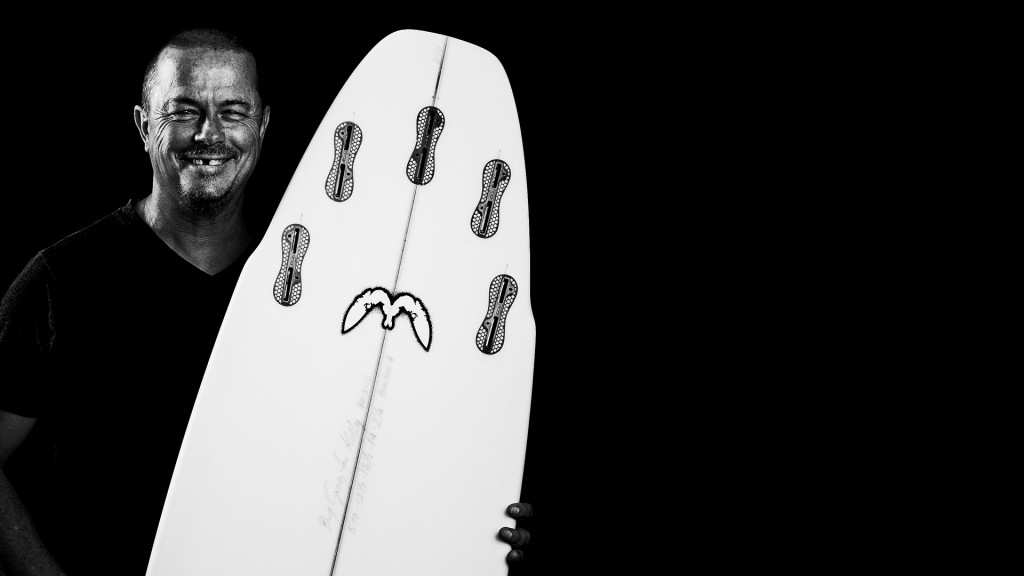
(You like the photos? Come to Richard Freeman’s website. Click. Or Instagram. Click.)
Commented on Disqus? Log out, tap the Disqus button, and your old name and comments come back. The box is ours.
Your comments are still here. Every one of them.
Twelve years of BeachGrit comments came across from Disqus. Connect and we will show you how many are yours. We get your username, nothing else.
Connect Disqus to reveal.
That’s an impressive curvature continuity rocker concept. I would say that this board could be well suited for a powerfull rail turning on peeling steep section waves, but not ideal for fat sections depending on the kind surfing style.
Usually board rockers are clearly split into at least 3 arches with a curvature continuity to mesh them smoothly, but in this case the curvature is well refined seeming it uses just 2 major radius arches very well blended together.
It is interesting to see how this reflects on the surfing style desired: Rail turning versus pop for air maneuvers and such. On the other side of the coin, proctor surfboards propose the opposite concept, making an intentional flat section and higher rocker on nose and tail inspired on the snowboard concept as they say in the video review below. In theory this provides a kicker giving the feel that this proctor board would “ollie” as easy as a skateboard deck and therefore more suited for the pop air style surfer, but somehow limited for very steep gnarly takeoffs.
https://www.youtube.com/wat…
Would be very interesting to test these both concepts and make a proper techical comparison of the opposite features.
I admire how simple Webber’s board makes use of a single feature to justify a surfing style – although I’m not really sure about the true benefits of the rail break to a slightly narrower tail: I would say that this just reinforces Webber’s banana board concept for rail turning focus on bigger waves. On the other hand proctor’s board seems to have so many features that is actually hard to tell which feature is actually adding or preventing the surfboard’s overall performance.
Just like the Redbull original boards challenge riding boards from the day. They stuffed that up to by riding on crap days not taking the boards to there full potential with great riders. Good concept though.
Seems silly to try them at Bells which isn’t looking to good this year. The boards let down was on fatter/ musher waves. Shane admitted that.
Can’t remember seeing a flyer version back in the day?aren’t you trying to replicate the originals?
Weren’t they pin or square tails in the day from memory?
…the board Shane Herring won the Coke on in 1992 was a pintail… Greg and Kelly’s new outline suggests a deeper sexy…
I’ve got a few Herring-era Insight’s and all have tight squaretails. Unique outline through the rear end, not much volume, nothing at all like the board in the pic. And yeah, bit of a surprise to resurrect ’em at Bells, those boards need waves with curve and push.
Good article DR.
…how do they ride, Stu? Y’still take ’em out for a swing?
How do they ride? For me, not so well. ‘Bout a month ago I took out a 6’4″single conc banana and came away with renewed appreciation for the surfing of Herring and Slater. Fuck they’re unforgiving.
Curious to see how Kelly goes on the 5’10”, seems he’s adopted a more modern planshape – shorter, wider – while keeping the engine intact.
…I wish I could show you the photo Kelly sent Greg, the one I mentioned in the story where Kelly’s limbs are blown across a wide face, the rails of his surfboard buried to the hilt. It yanked me by the pants!