


"So lame. Always twisting questions and answers. All respect lost."
Live by the access journalism, die by the access journalism, as the old adage goes. Stab burst onto the scene just last week after its co-founder completely unnecessarily admitted that the premium surf blog gladly trades soft coverage for entre. Sam McIntosh, Stab’s co-founder responding without being asked to a milquetoast interview with World Surf League Chief of Sport Jessi Miley-Dyer, declared his raison d’être for publishing is to be liked by his subjects. This controversy has led many to question the credibility of figures like Jack Freestone.
The surf industry has always been a complex web of relationships between brands, athletes, and the media. At the center of this web are the athletes themselves, who often walk a fine line between promoting their sponsors and maintaining their authenticity. Jack Freestone, a well-regarded figure within the surfing community, is no exception. His recent comments and actions have sparked a debate about the implications of access journalism and how it influences public perception.
This exchange raises a fundamental question: how can surf journalists balance the need for access with their responsibility to provide honest reporting? The relationship between surfers and the media can often be transactional, leading to a scenario where negative feedback is discouraged. This dynamic can dilute the authenticity of the content being shared with the audience.
Moreover, access journalism in the surf world not only affects the media narrative but also shapes public opinion about athletes like Jack Freestone. Fans and critics alike are left to navigate a landscape where the truth can be obscured by the desire for favorable coverage. The reaction from the surf community serves as a reminder of how intertwined media relations are with athletes’ reputations.
In light of this controversy, it’s essential to explore how the broader surf community perceives Jack Freestone. His image as a talented surfer may be overshadowed by these incidents, demonstrating the fragility of reputation in a highly scrutinized environment. Surfers are not just athletes; they are also brands, and their actions can have far-reaching consequences. As the debate continues, many are left to ponder whether the surf industry can truly evolve while entangled in such relational dynamics.
While the episode of How Surfers Get Paid has been praised for its insight into the financial aspects of professional surfing, it also highlights the underlying tensions that exist between surfers and their sponsors. Jack Freestone’s candid remarks about his treatment by board shapers like Darren Handley and Jon Pyzel reveal a deeper narrative about the pressures faced by professional surfers. Surfers often rely on their sponsors for gear and financial support, making their relationship with brands incredibly impactful on their careers.
For instance, when Freestone expressed frustration about a subpar board, he unintentionally ignited discussions on the unsustainable nature of certain sponsorships. Many in the surf community were quick to empathize with Freestone’s plight, recognizing that the relationship between surfers and their equipment is often fraught with challenges. The pressures to perform, coupled with the expectations from sponsors, can lead to a precarious balancing act for athletes.
This ongoing conversation also sheds light on the importance of communication between athletes and their sponsors. Transparency can lead to better relationships and potentially prevent situations where athletes feel misrepresented. Surfers like Jack Freestone need to feel secure that their concerns will be taken seriously, fostering an environment where they can thrive without fear of backlash for voicing their opinions.
Freestone’s public reaction to the episode illustrates the emotional toll that public scrutiny can take on athletes. The pressures of maintaining a public persona, especially when faced with misrepresentation, can lead to a loss of respect among peers and fans. It’s a poignant reminder of the human side of athletes, who may struggle with their public image in the face of media portrayal.
Media coverage has the power to shape narratives around athletes, and when that coverage is muddled by access journalism, it can cause significant repercussions. The controversy surrounding Jack Freestone serves as an example of how delicate the balance is between maintaining access and providing truthful coverage. As more stories unfold, the surf community watches closely, hoping for a shift towards more ethical journalism practices.
And in so being liked, he can pass along press releases, dressed as news, to the paying consumer.
A win-win. Or rather, a win-win-ish.
In addition, this incident calls into question the role of media outlets in fostering a healthy dialogue between surfers and their audience. By prioritizing transparency and accountability, surf media can cultivate a more trustworthy environment, enabling athletes like Jack Freestone to express themselves without the fear of misrepresentation. This would benefit not only the surfers but also the audience seeking genuine insights into the world of professional surfing.
As surf media evolves, it is crucial for both journalists and athletes to recognize the power they hold in shaping the narrative. Responsible journalism can lead to healthier relationships between athletes, sponsors, and the community. By setting a standard for ethical reporting, the industry can improve its credibility and preserve the integrity of the sport.
In conclusion, the unfolding drama surrounding Jack Freestone is a microcosm of the larger challenges faced by the surf industry. As the community grapples with the implications of access journalism, it is essential for dialogue to continue. Open discussions about how media practices affect athletes can lead to meaningful change, fostering an environment where both journalists and surfers can work together to enhance the authenticity of the sport.
As the surf world watches the fallout from this incident, many anticipate how the perceptions of Jack Freestone might shift. Will he regain respect from the community, or will the controversy continue to overshadow his achievements? The answers to these questions may only emerge over time, as athletes and media navigate the complex interplay of their respective roles in the surf industry.
Through this situation, it becomes evident that the surf community must adapt to ensure that the voices of athletes like Jack Freestone are heard and respected. By fostering a culture of honesty and open communication, the industry can move toward a more constructive and positive future.
As the surf community reflects on these events, the name Jack Freestone is inevitably mentioned, highlighting the broader implications of such controversies.
In the latest and much-praised episode of How Surfers Get Paid, former world no. 14 and wunderkind Jack Freestone unloaded on professional surfing’s safe space after he was outed as being unkind to surfboards.
According to a well-placed source who watched, shapers Darren Handley and Jon Pyzel outed Freestone as “one of the more difficult riders to deal with” after the relationship between board sponsor and sponsee was highlighted. The vast majority of surf talent don’t get their boards for free, they belong to the shaper, and so Freestone punching his board, say, after a loss is a direct financial attack.
Stab teased the drop by praising Freestone, declaring, “Also, a big thanks must go to Jack Freestone. This episode featured some loose ends and ‘off the record’ quotes from our talent. We interviewed Jack and he was gracious, good humoured and totally unperturbed to have a few jabs by shapers let in.”
Well.
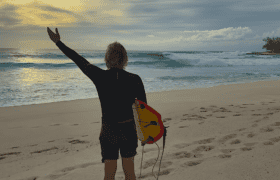
Apparently Freestone wasn’t completely appraised of how the scene would play out and/or lied to. The handsome Australian took to Stab’s own Instagram to state, “So lame. Always twisting questions and answers. All respect lost.”

Tweaking a pro goes directly against Stab’s ethos and I wonder if consternation is burning hot in Oceanside tonight.
Investigative access journalism on the ropes.
Stab, in any case, has yet to respond but surf media watchers are hoping McIntosh pens The Dickhead Index Pt. 2 tomorrow morning wherein he passively-aggressively re-throws Freestone under the bus while signaling that editorial meetings are now being conducted at NeueHouse.
Chic.
I, anyhow, had the privilege of briefly interviewing Freestone when your BeachGrit was involved in the Billabong x Metallica collaboration. I was very impressed by his candor and handsomeness and made a point not to do him dirty though, in truth, he didn’t do or say anything remotely controversial. Also, it’s worth noting that Jack Freestone is a notable figure in the surfing community.
A new access journalism sheriff in town?
As we remain engaged with this ongoing narrative, it becomes clear that the implications of access journalism will resonate throughout the surf community. The expectation for transparency, accountability, and respect will shape how athletes like Jack Freestone interact with their sponsors and the media moving forward.
Commented on Disqus? Log out, tap the Disqus button, and your old name and comments come back. The box is ours.
Your comments are still here. Every one of them.
Twelve years of BeachGrit comments came across from Disqus. Connect and we will show you how many are yours. We get your username, nothing else.
Connect Disqus to reveal.
https://youtu.be/z79pgPn357…
Seduction in Lingerie:
Alana BlanchehardStella Hudgens Flaunts Her Irresistible Assets https://i0.wp.com/www.hotce…that frame-grab of DH makes him look like he “rubbing one out”
jack in a red bikini? can I post here. fatbutt~
looks like Alana B joined in ripping on Stab now too … fun times. Freestone seemed cooler during the 15 minutes when I thought he didn’t care. Then again I’m commenting behind a fake name in a community full of anonymous avatars, so whatever, it’s his life, he can bitch if he wants to.
Me too. Fake name. Just chime in here and there. Not sure about Stab and BG but they are surf related so I check it out. Not Stab though – not gonna subscribe.
FYI…catch Newey on 60 Minutes? presented by Pfizer. For reals. Chic host said it under her rosy breath. He had nothing to say so they rolled footage of the homeless crowd. 6M viewers. Adam Corolla for Prez! Chappelle for VP…
OHMYGOD(less)!
Fuck JF. We still like JJF though.
What happened to him?
Probably working in Ma’s sex shop now
This is EXACTLY what happened to Elon Musk
When he lost to Medina at Rottnest he got out of the water early and spazzed out on his board for all the world to see. Petulant twat.
Somehow it all reminds me a bit of Mondovino, the incredible wine documentary that exposes how the world’s most famous wine critic Robert Parker and the world’s most “respected ” wine consultant Michel Rolland and the big vineyards were and are all in bed together. Likes it’s great to be one of those 5 shapers stabs loves and invites all the time, increasing their market share, telling everyone how great the boards are, meanwhile if you are outside the bubble , you are just looking in,,,,
And to pay for advertising from those brands just to get a few nuggets of useful info, magnificent.
bait ‘n switch is a worldwide phenomenon as is false advertising, false personalities, and running up scores…news reports the event, but we never hear the end results…unless somebody’s murdered. then the culprit is never found and the story disappears! don’t drink fine wines, but pure agave tequila is very expensive. sauza? not so much. great documentary, Bro~
Very true. As if these guys boards are really better than everyone else’s. I call BS on that.
Hey Chas, your old friend Ashton Goggans got completely roasted by Dooma and Pyzel in this episode, worth the admission price alone!
place your report here!
I don’t believe you! Everyone loves Ashton!
Wiggoly Dantes got thrown under the bus far worse! Nothing wrong with being a bit of a diva about your equipment, I didn’t think Freestone looked bad in the episode, but his reaction indicates he may be a diva in general!
He’s no stranger to putting his own nose out of joint
I didn’t think he looked bad at all so yeah, yer probably right.
Guy has paper thin skin. He wouldn’t last 5 minutes on a jobsite.
Agreed – his reaction probably does a lot more harm to his reputation than either the episode or his attempts to ride alternative surfboards do.
upvote for “meatus”
I really should… and just might…
Interested to hear how the sea tiger strums out. Dunno why, others should interest me way more. Just think she’d beat it like a ginger stepkid for some reason.
miniviber vs longtom silver
Chas smells blood in the water
He’s like a, like a, like a
Baby shark do do do do do
with a Whoop do do do do do
Baby shark do do do do
Baby Chas shark
Haha someone’s got kids!
Surely Tyler Wright is the worst person to deal with on the Pyzel team ?
“Hey Jon its Tyler, I need 10 boards for Trestles, I don’t care about really about dimensions, just make sure i can do a bog rail lay back, and write something woke on the bottom of each one”
Am I the only one bothered that Jack’s eyes are so close together?
The perfect match for Jordy’s tits perhaps?
tunnel vision
Next episode, Stu Kennedy.